
Oxeye presents a tightly woven tasting menu that prioritises seasonal British ingredients with subtle global technique. Meals typically run 10 to 12 courses over two hours and a half to three hours, paced to encourage conversation and attentive service. The focus is on clarity of flavour, respect for provenance, and moments of surprise rather than dramatic showmanship.
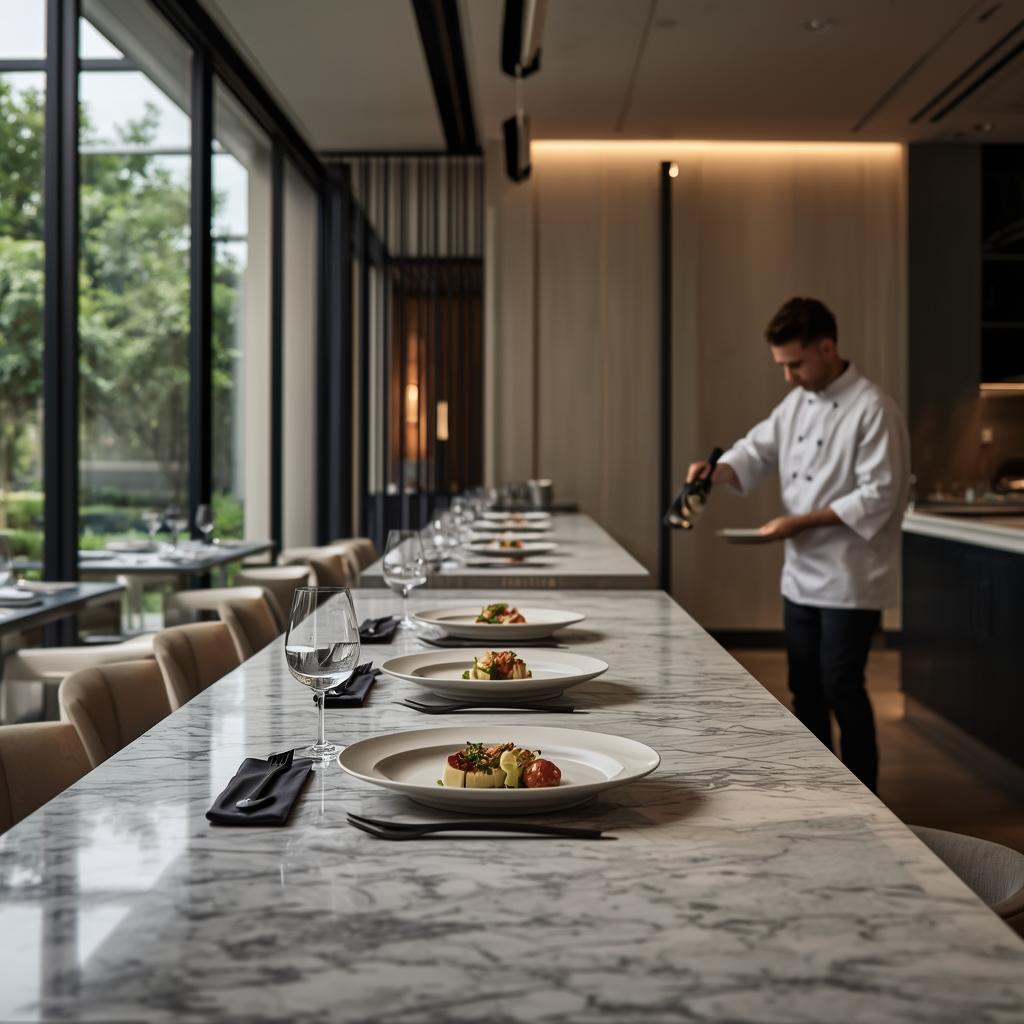
Sven-Hanson Britt launched Oxeye in 2025 after formative training across Scandinavia and the United Kingdom. The culinary direction blends classical French technique, Nordic ingredient respect, and modern British flavours. The core kitchen comprises a head chef de cuisine, a pastry chef trained in laminated and sugar techniques, two sous chefs, and a garde manger who manages foraged and preserved elements. The team operates on brigade principles but with cross-training so that front-of-house can narrate provenance and technique with confidence.
Embassy Gardens in Nine Elms positions Oxeye within a rapidly evolving riverside neighbourhood that includes New Covent Garden Market a short walk away. The dining room channels light oak, muted greens, and riverside views. Seating is a mix of intimate two-tops and larger tables, with a private dining room available for groups up to 14. Arrival rituals begin with a discreet cloak and warming towel, a single amuse-bouche presented table-side, and a short verbal welcome that outlines the evening’s pace and any necessary allergy checks.
Reservations are handled through the restaurant website and a phone booking line. Special requests for dietary restrictions, celebrations, or anniversary cakes are accommodated with 72 hours notice recommended for full customisation. Walk-ins are accommodated when possible but demand is high on Thursday to Saturday evenings and around public holidays tied to the Embassy Gardens events calendar.
The menu structure is deliberately rhythmic: an amuse-bouche, three seafood and shellfish-led plates, two vegetable-forward courses that incorporate foraged elements, a meat or game sequence, a palate cleanser, and a composed dessert. Bread is house-baked sourdough served with cultured butter and a smoked salt compound butter; condiments include a seasonal relish and a fermented vegetable conserve prepared in-house. Pacing aims for 90 to 120 minutes between savouries and dessert with a 10 to 15 minute pause before the final sweet course.
Sourcing emphasises proximate relationships. Producers include smallholder farms in Surrey and Kent for root vegetables and lamb, Cornish fisheries for catch landed within 24 hours, and suppliers from the Scottish coast for scallops and langoustine in season. New Covent Garden Market is a daily source for specialty produce, and foraged hedgerow botanicals are gathered under licence from approved local sites during autumn and spring. Sustainability measures include reduced single-use packaging, whole-hog or whole-fish utilisation where appropriate, composting of organic waste, and lean ordering cycles keyed to reservation levels to minimise surplus.
Global influences are present but restrained. Techniques borrowed from Japan and Scandinavia appear in curing, fermentation, and delicate broths. Condiments may nod to yuzu or miso but are applied to accent British ingredients such as Isle of Wight tomatoes or wild garlic rather than to overwhelm them.
Signature elements and representative dishes appear below to show approach to technique and pairing:
| Course | Focus | Key ingredient | Kitchen technique | Pairing suggestion |
|---|---|---|---|---|
| Amuse-bouche | Bright opener | Autumn hedgerow vinegar | Quick pickling, espuma finish | English sparkling (Nyetimber Classic Cuvée) |
| Shellfish plate | Texture contrast | Cornish scallop | Seared, cured roe, butter emulsion | Dry Fumé Blanc from Loire |
| Vegetables | Earthy, umami | Foraged wild garlic | Salt-baked, roasted miso jus | Light Riesling Kabinett |
| Fish main | Clean, mineral | Lyme Bay cod | Low-temp confit, kelp velouté | Chablis Premier Cru |
| Game course | Rich, spiced | Surrey venison | Wood-ash sear, berry gastrique | Mature Syrah from Northern Rhône |
| Palate cleanser | Acid and herb | Cucumber and sorrel | Granita with aquavit infusion | Non-alcoholic shrub |
| Dessert | Textural contrast | English strawberries | Compressed fruit, crème fraîche sorbet | Late harvest English dessert wine |
Seafood plates emphasise traceability and minimal handling to showcase natural sweetness and brine. Vegetable-led courses rely heavily on lacto-fermentation and dry-ageing roots to concentrate flavour. Meat and game are prepared with classic roast and sear techniques but often finished with foraged salts or spruce oil to impart terroir. Palate cleansers are herbal and vinegar-led to reset the taste and are intended to be small and bright.
Wine pairing philosophy privileges English sparkling producers alongside small family domaines in France, Spain, and Italy. Sommelier notes highlight regional matchups: shellfish with minerally whites, game with medium-bodied reds that have fine tannins. Non-alcoholic pairing options are developed in-house, featuring house shrubs, low-alcohol fortified verjus, and barrel-fermented kombucha preparations that mirror wine structure.
Service is scripted but flexible. Timing is synchronised to the kitchen’s pass; storytelling is concise and focused on producer names, seasonality, and a single technical note such as curing time or ageing days. Staff are trained to manage dietary restrictions through pre-shift briefings, which allow for tailored veg-forward menus, gluten-free breads, and nut-free desserts with advance notice. Private tastings and chef’s table experiences are available with bespoke menus and a dedicated sommelier.
Pricing is communicated transparently: the standard tasting menu typically sits between £150 and £175 per person with wine pairings from £95 to £145 per head. Special events and private dining have set minimum spends that scale with day and time. Value perception is reinforced through provenance transparency, technique, and the level of service, rather than theatrical plating.
Guest feedback has cited precision in seasoning, confident pacing, and a room that balances calm with energy. Coverage in London dining guides praises the restaurant’s consistency since opening and its contribution to the Nine Elms dining scene. Best times to visit are midweek evenings and late lunch services when available, both of which offer slightly shorter waits and a quieter ambience.
Practical tips and etiquette: